In today’s digital world, businesses don’t just want visibility — they want measurable results. That’s where performance marketing comes in.
Performance marketing is one of the fastest-growing digital marketing strategies because it allows businesses to pay only when a specific action happens. Whether that action is a click, lead, sale, app install, or subscription, brands invest their budget in outcomes — not assumptions.
If you want to understand performance marketing in simple terms and learn how it works, this complete guide will help you.
What Is Performance Marketing?
Performance marketing is a results-driven digital marketing strategy where advertisers pay marketing platforms or partners only when a desired action is completed.
Unlike traditional advertising (TV, radio, billboards), where you pay upfront for exposure, performance marketing focuses entirely on measurable performance.
Simple Definition:
Performance marketing = Pay for results, not for reach.
How Performance Marketing Works
Performance marketing follows a clear and trackable process:
- A business creates a campaign.
- The campaign runs on a digital platform.
- Users interact with the ad.
- The advertiser pays only when a specific action happens.
These actions may include:
- Clicking an ad
- Filling out a form
- Purchasing a product
- Downloading an app
- Subscribing to a channel
Every action is tracked using analytics tools, tracking pixels, and conversion systems.
Common Payment Models in Performance Marketing
Understanding the pricing models is important:
1. CPC (Cost Per Click)
You pay each time someone clicks your ad.
2. CPA (Cost Per Acquisition)
You pay only when someone completes a specific action like a purchase.
3. CPL (Cost Per Lead)
You pay when someone submits their contact information.
4. CPS (Cost Per Sale)
You pay only when a sale happens.
5. CPI (Cost Per Install)
Common in mobile app campaigns — payment occurs when someone installs your app.
These models make budgeting more predictable and ROI-focused.
Key Channels Used in Performance Marketing
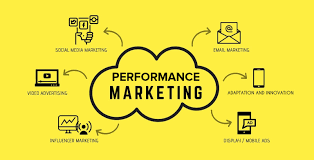
Performance marketing runs mainly through digital platforms. Here are the most popular channels:
1. Search Engine Marketing (SEM)
Paid ads on search engines help businesses target users who are actively searching for products or services.
2. Social Media Advertising
Platforms like Facebook, Instagram, and TikTok allow detailed targeting based on interests, behavior, and demographics.
3. Affiliate Marketing
Businesses partner with affiliates who promote products and earn commissions per sale or lead.
4. Influencer Performance Campaigns
Influencers promote products and get paid based on tracked conversions rather than flat fees.
5. Display & Native Advertising
Banner ads and sponsored content placed on websites to drive traffic and conversions.
6. Email Marketing
Performance-based email campaigns that track clicks and sales.
Why Performance Marketing Is So Powerful
Businesses love performance marketing because it offers several advantages:
Measurable Results
Every campaign is tracked with real-time data.
Better ROI
You spend money only when results happen.
Scalable Growth
If a campaign works, you can increase the budget and scale quickly.
Data-Driven Decisions
Analytics help optimize campaigns continuously.
Lower Risk
You avoid wasting money on ads that don’t convert.
Performance Marketing vs Traditional Marketing
Traditional marketing focuses on brand awareness and visibility. It is often difficult to measure exact results.
Performance marketing focuses on:
- Conversions
- Sales
- Leads
- Measurable growth
While traditional marketing builds long-term brand recognition, performance marketing drives immediate, trackable actions.
Many successful brands combine both strategies for balanced growth.
Important Metrics in Performance Marketing
To succeed in performance marketing, you must track key metrics:
Conversion Rate
The percentage of users who complete the desired action.
Cost Per Acquisition (CPA)
How much you spend to acquire one customer.
Return on Ad Spend (ROAS)
Revenue generated compared to ad spend.
Click-Through Rate (CTR)
Percentage of people who click on your ad.
Customer Lifetime Value (CLV)
Total revenue expected from a customer over time.
These metrics help marketers optimize campaigns for better performance.
The Role of AI in Performance Marketing (2026 Trend)
Performance marketing has evolved rapidly with AI and automation tools.
Modern platforms now:
- Automatically adjust bids in real-time
- Optimize audience targeting
- Generate ad creatives
- Predict customer behavior
AI reduces manual effort and improves campaign efficiency.
Who Should Use Performance Marketing?
Performance marketing works for:
- E-commerce businesses
- SaaS companies
- Mobile app developers
- Content creators
- Online course sellers
- Local service providers
- YouTube creators
If your goal is measurable growth, performance marketing is ideal.
How to Start Performance Marketing (Beginner Steps)
Here is a simple step-by-step guide:
Step 1: Define Your Goal
Decide what action you want (sale, lead, click, install).
Step 2: Choose a Platform
Select where your audience spends time.
Step 3: Set a Budget
Start small and test different campaigns.
Step 4: Create High-Converting Creatives
Use clear messaging and strong call-to-action.
Step 5: Track & Optimize
Analyze performance and improve weak areas.
Consistency and testing are key to success.
Common Mistakes to Avoid
- Not tracking conversions properly
- Targeting too broad an audience
- Ignoring landing page optimization
- Scaling too quickly without testing
- Focusing only on clicks instead of conversions
Avoiding these mistakes increases your success rate.
Final Thoughts
Performance marketing has transformed how businesses advertise online. Instead of paying for impressions or guesses, companies now invest in measurable outcomes.
In simple words:
Performance marketing is a smart, data-driven strategy where you pay for real results.
As digital competition grows in 2026 and beyond, businesses that understand performance marketing will have a major advantage.
If you want scalable growth, measurable ROI, and better control over your marketing budget, performance marketing is the strategy to master.